Teaching
Music Education Across the Lifespan
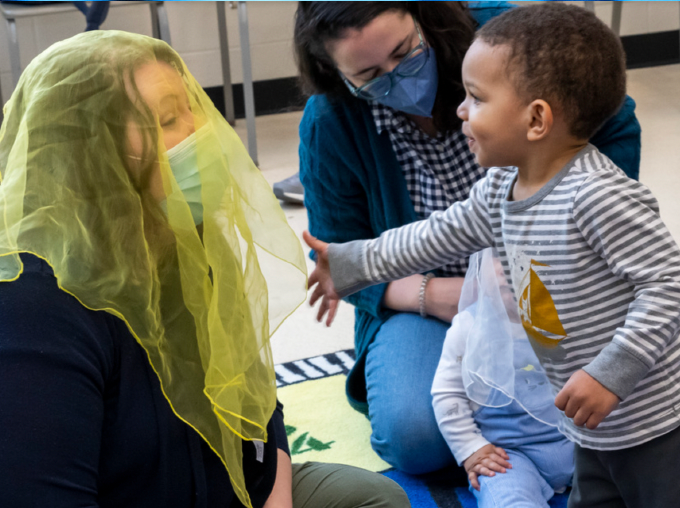
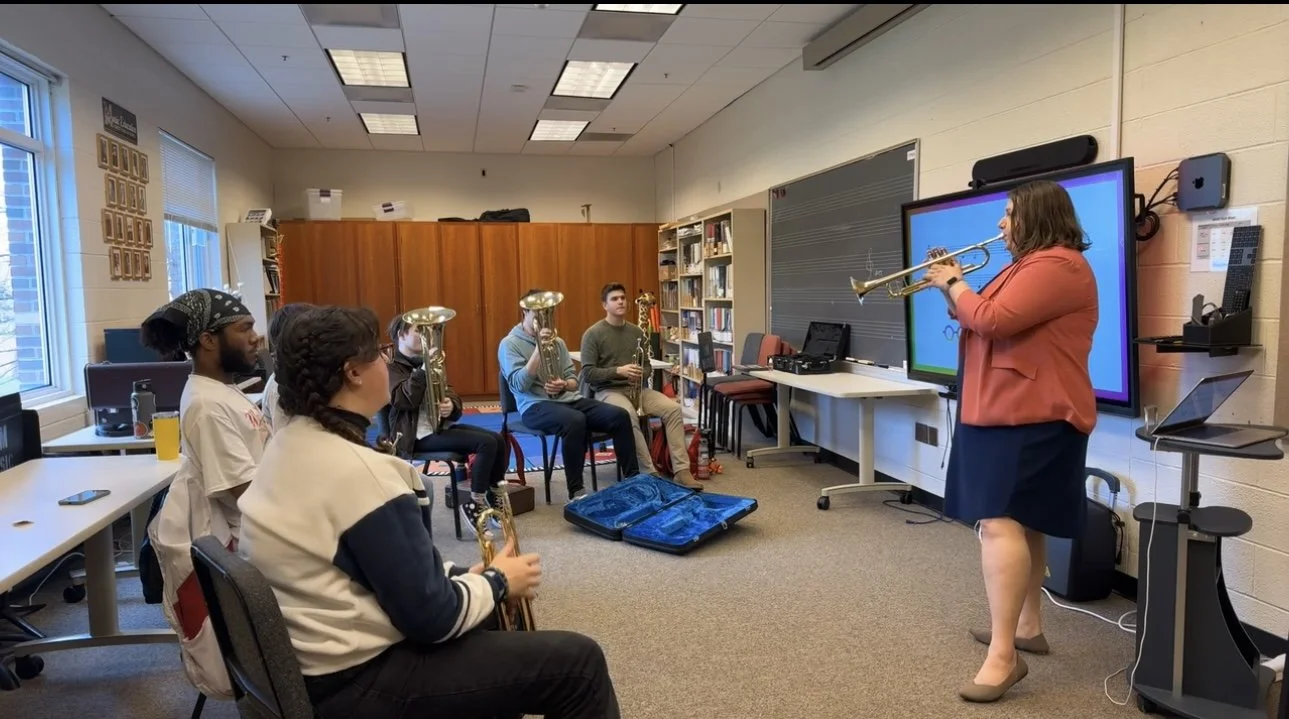
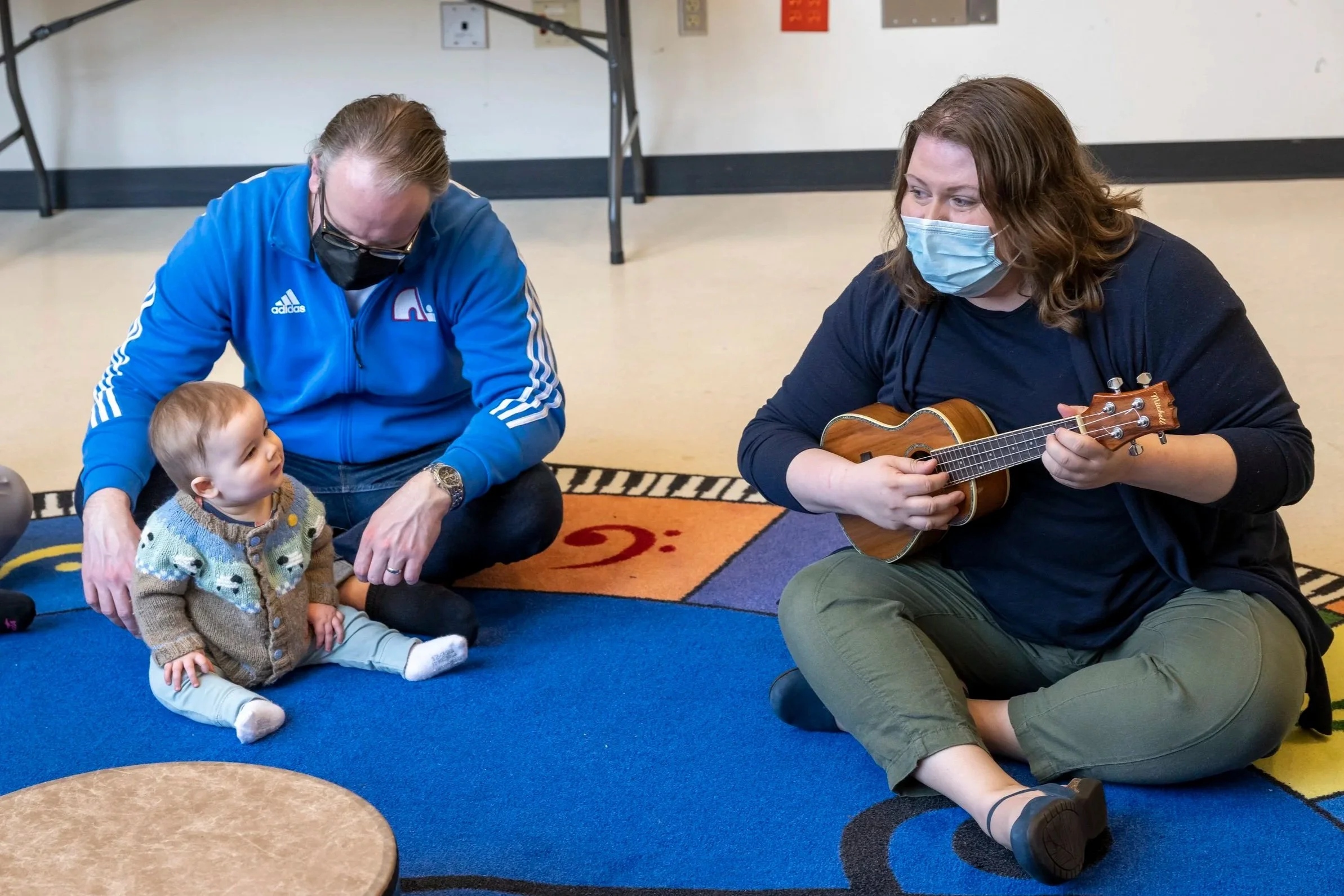
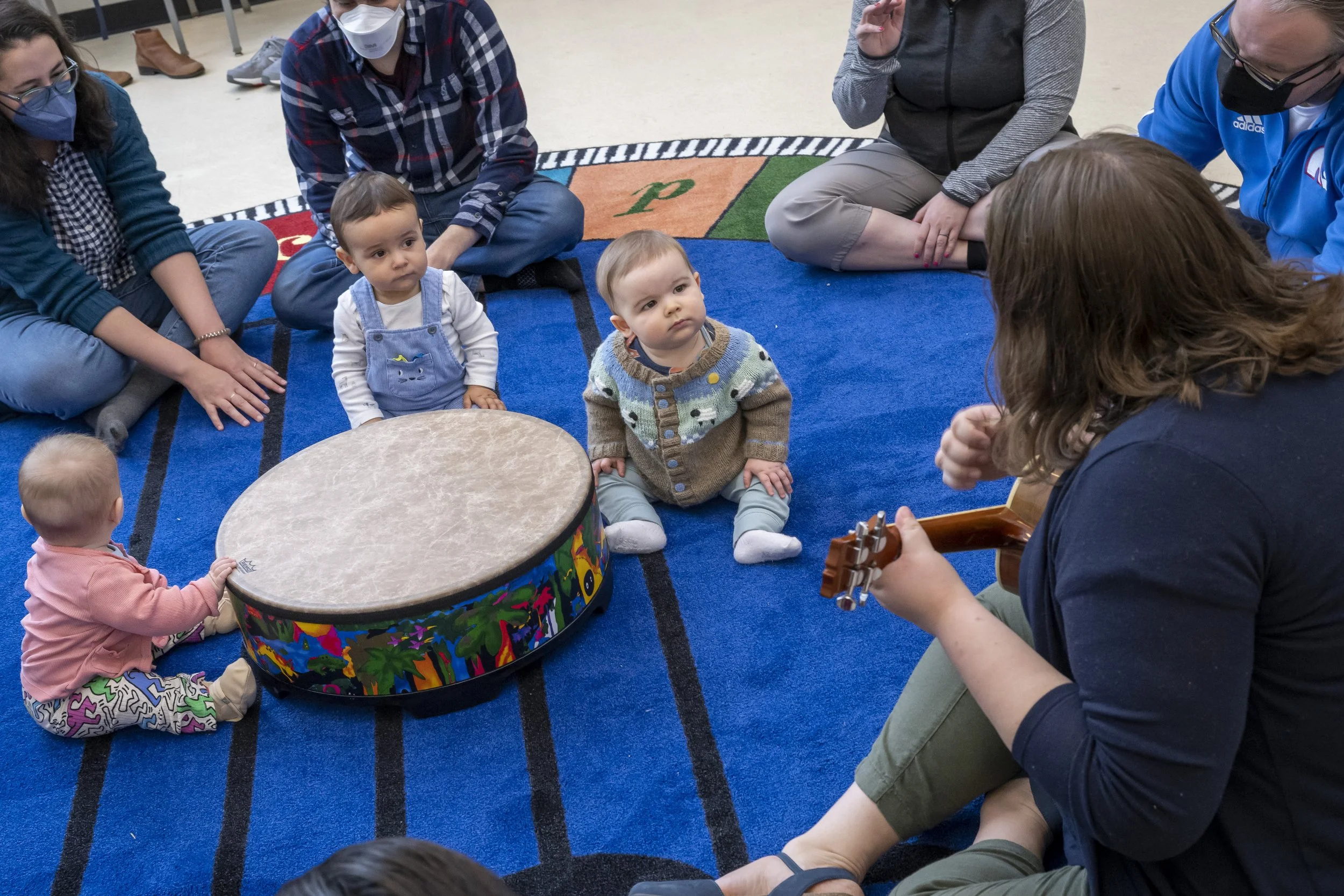
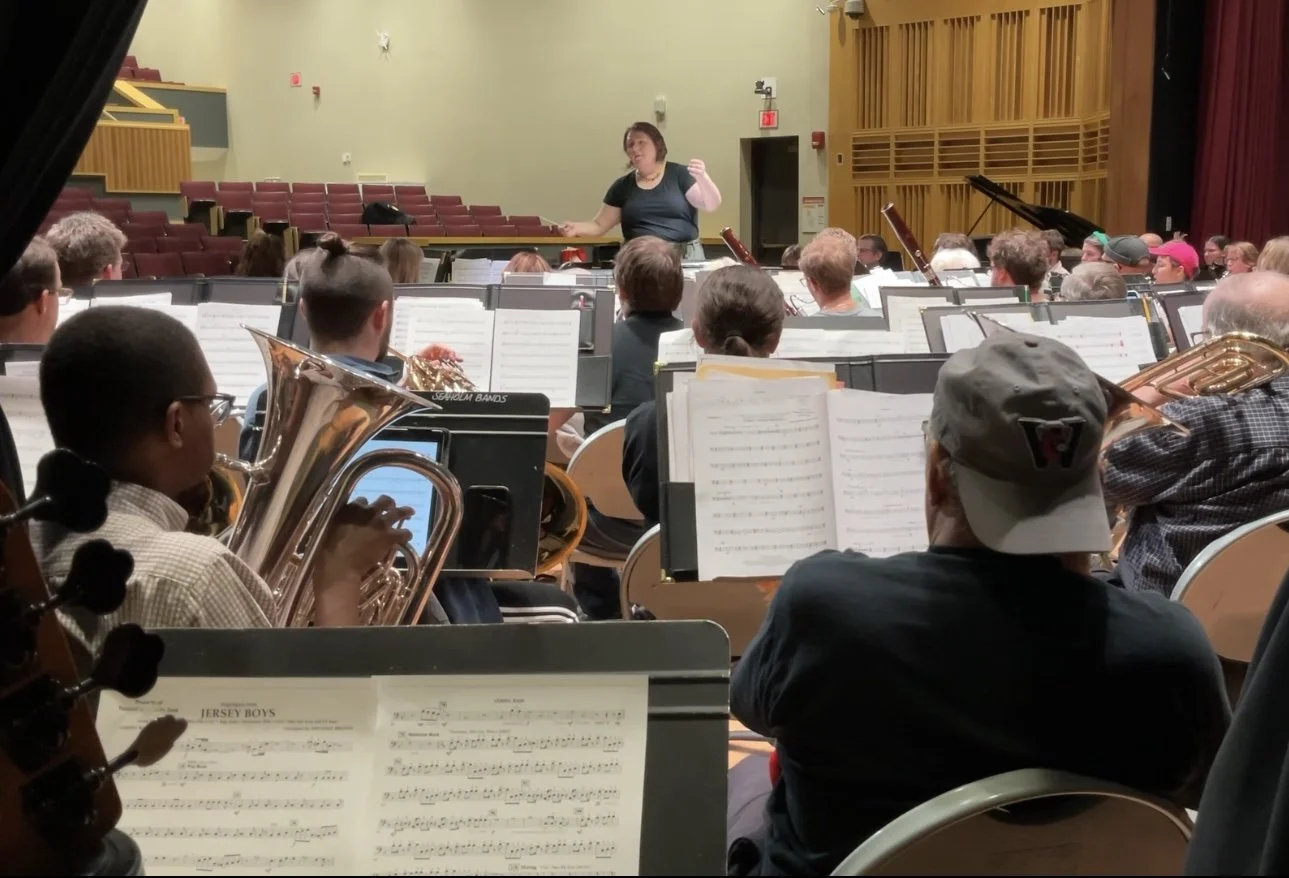
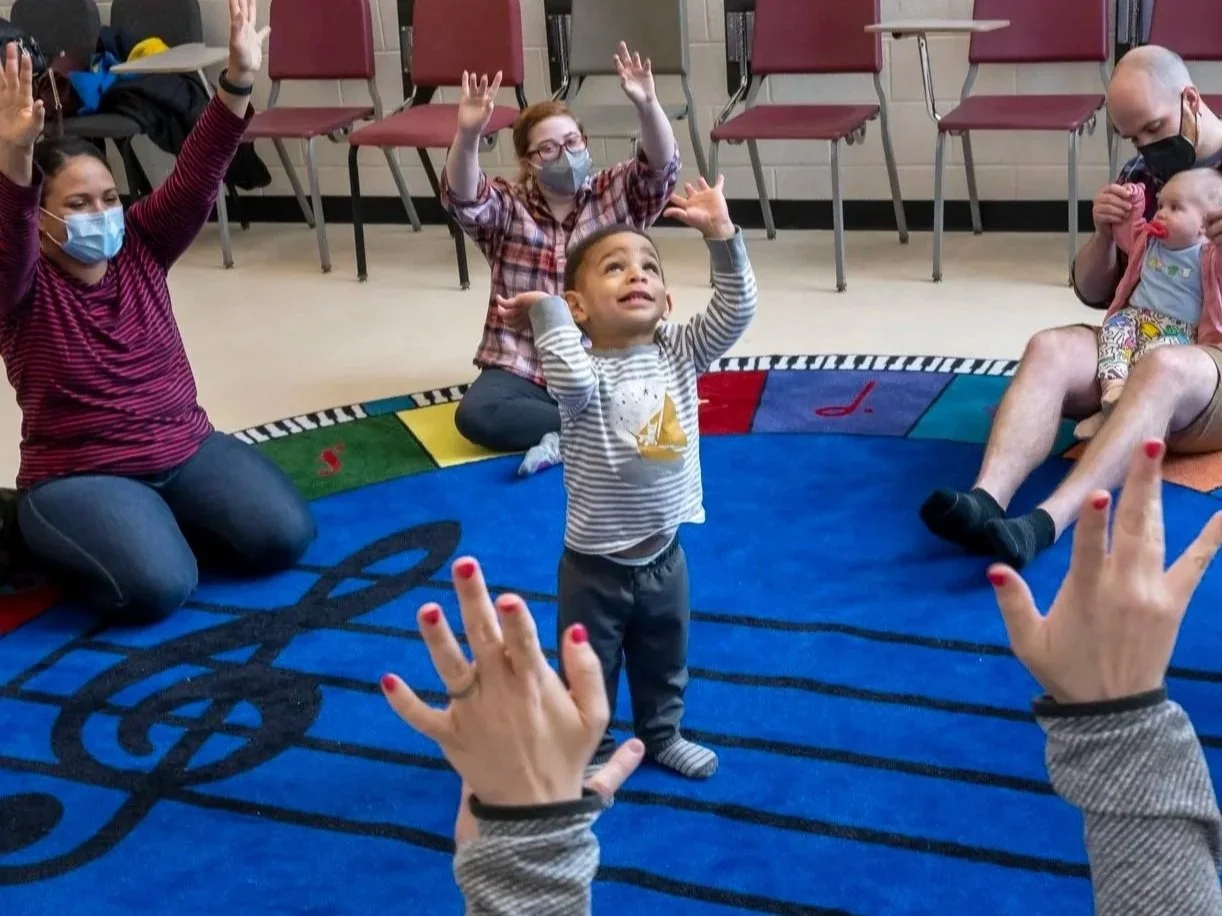
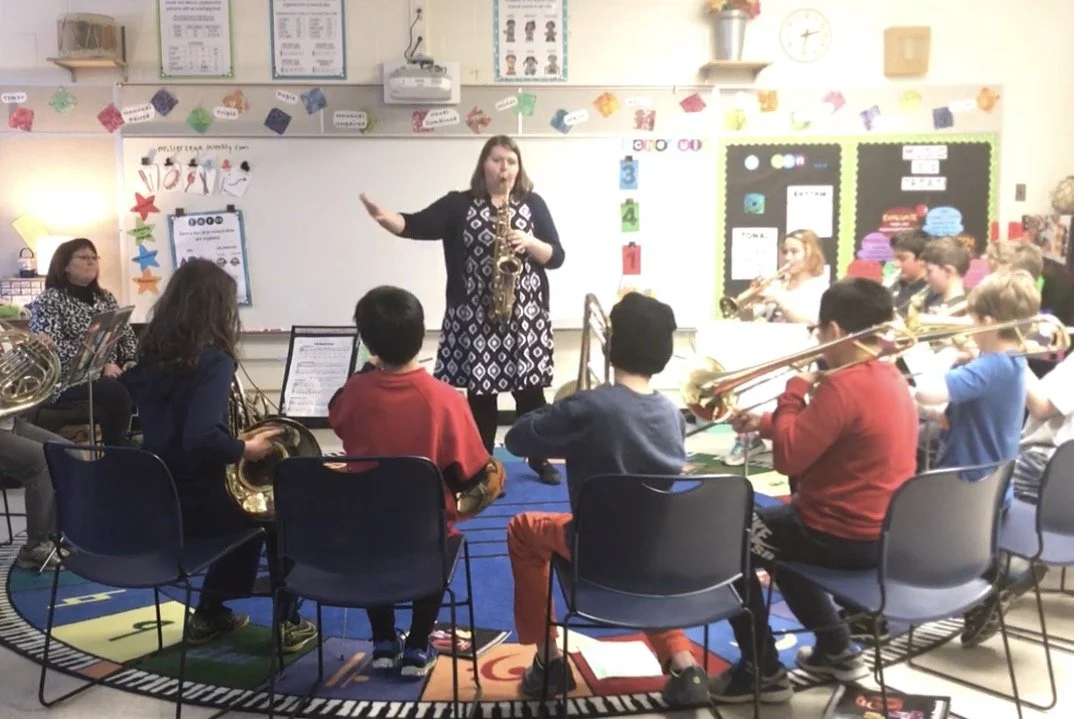
My teaching experience & expertise reflects a wide range of ages, abilities, and settings. While early childhood & elementary general music education are my primary areas of focus, my multifaceted work demonstrates my commitment to supporting safe, joyful, and educative musicking experiences with musicians across the lifespan.
Sing
·
Play
·
Audiate
·
Create
·
Listen
·
Improvise
·
Move
·
Perform
·
Amplify
·
Analyze
·
Arrange
·
Compose
·
Chant
·
Wait
·
Breathe
·
Pause
·
Sing · Play · Audiate · Create · Listen · Improvise · Move · Perform · Amplify · Analyze · Arrange · Compose · Chant · Wait · Breathe · Pause ·
Professional Development Sessions & Materials (Selected)
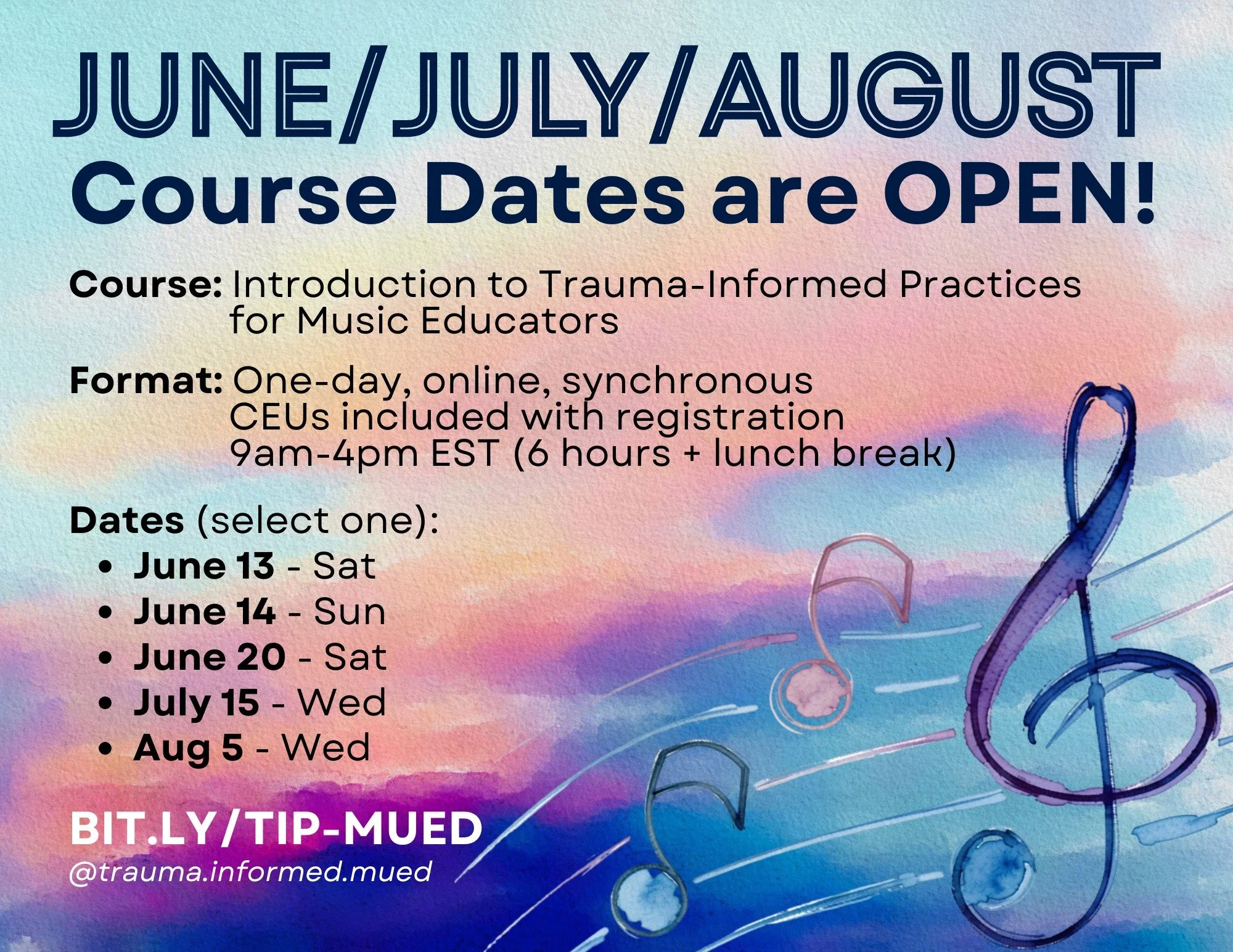
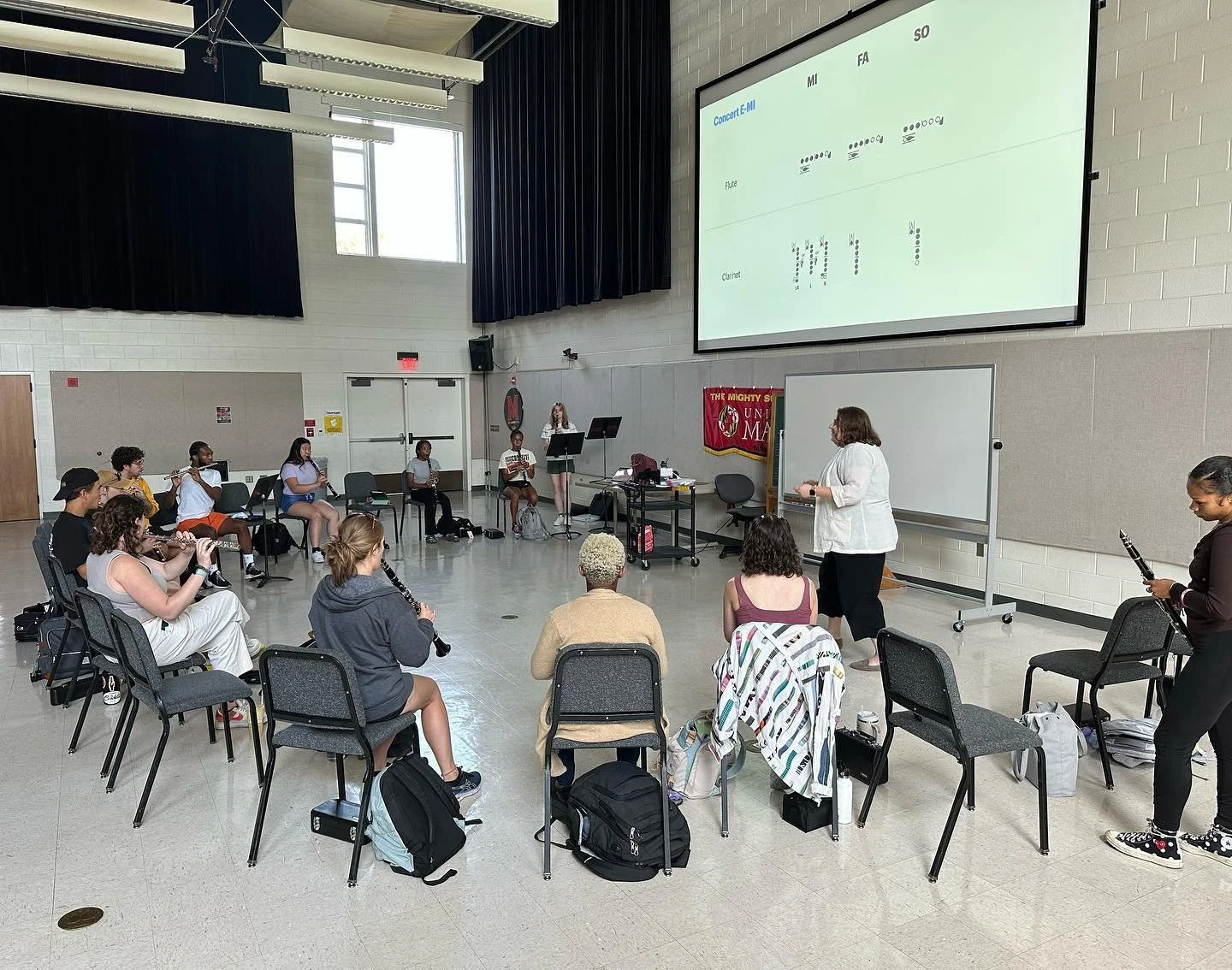
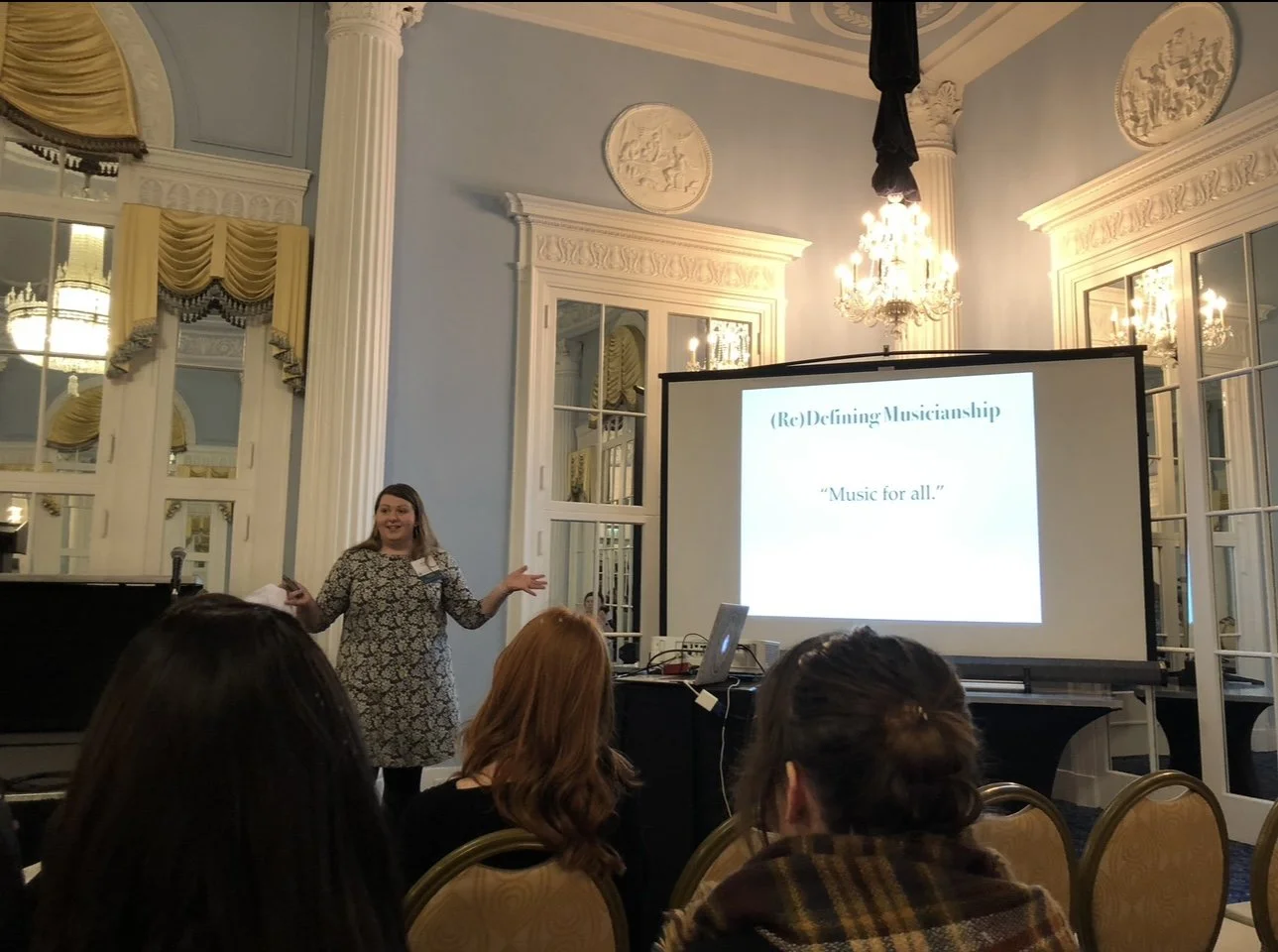
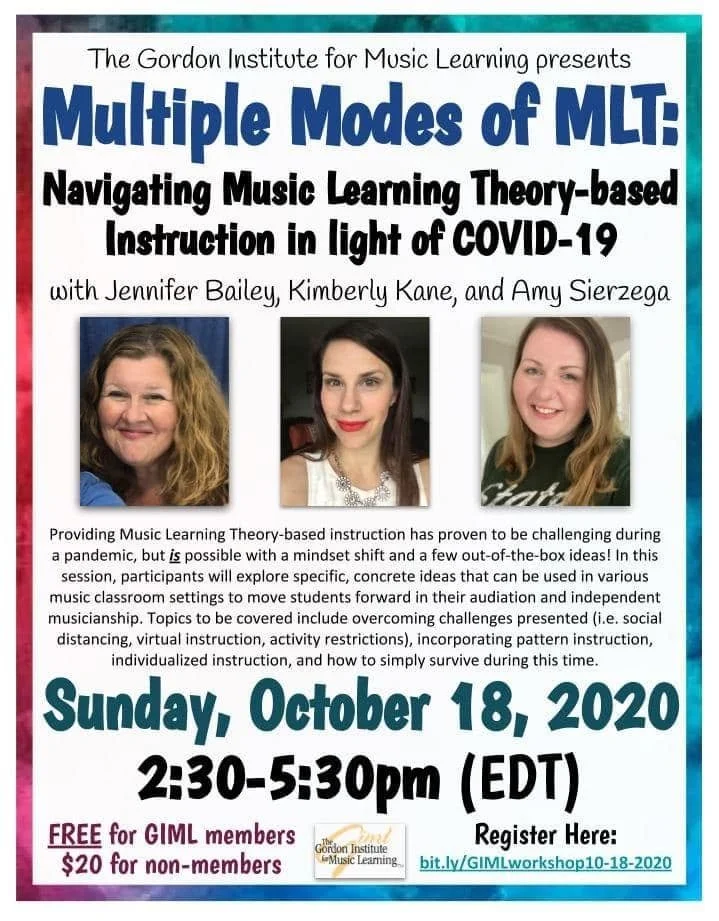
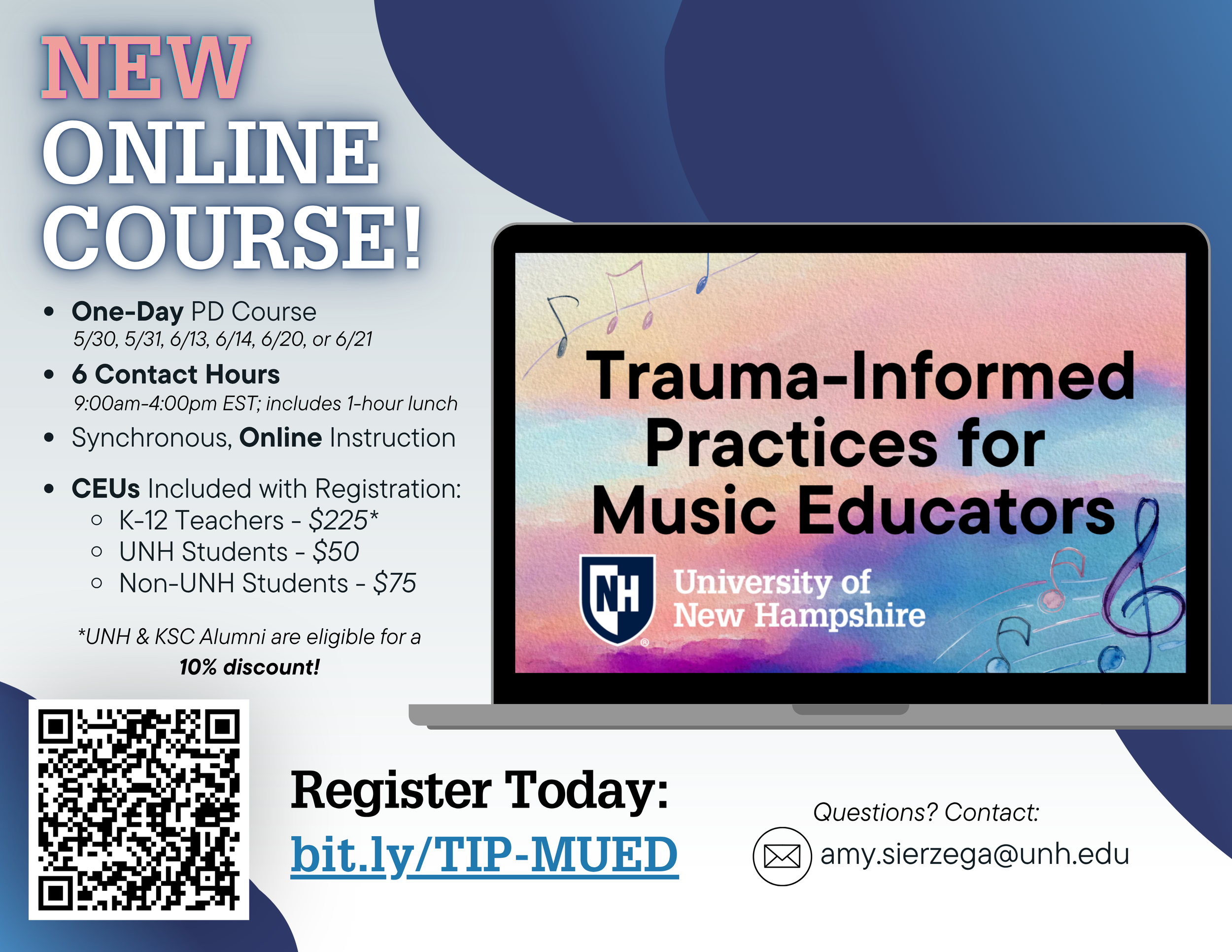
Professional learning occurs across stages of music teacher development. As an active facilitator of workshops and professional development sessions for music educators, it is a privilege to share with others what I have learned alongside my own PK-20 colleagues, students, and mentors. Please reach out if you have any questions about these materials or other materials!
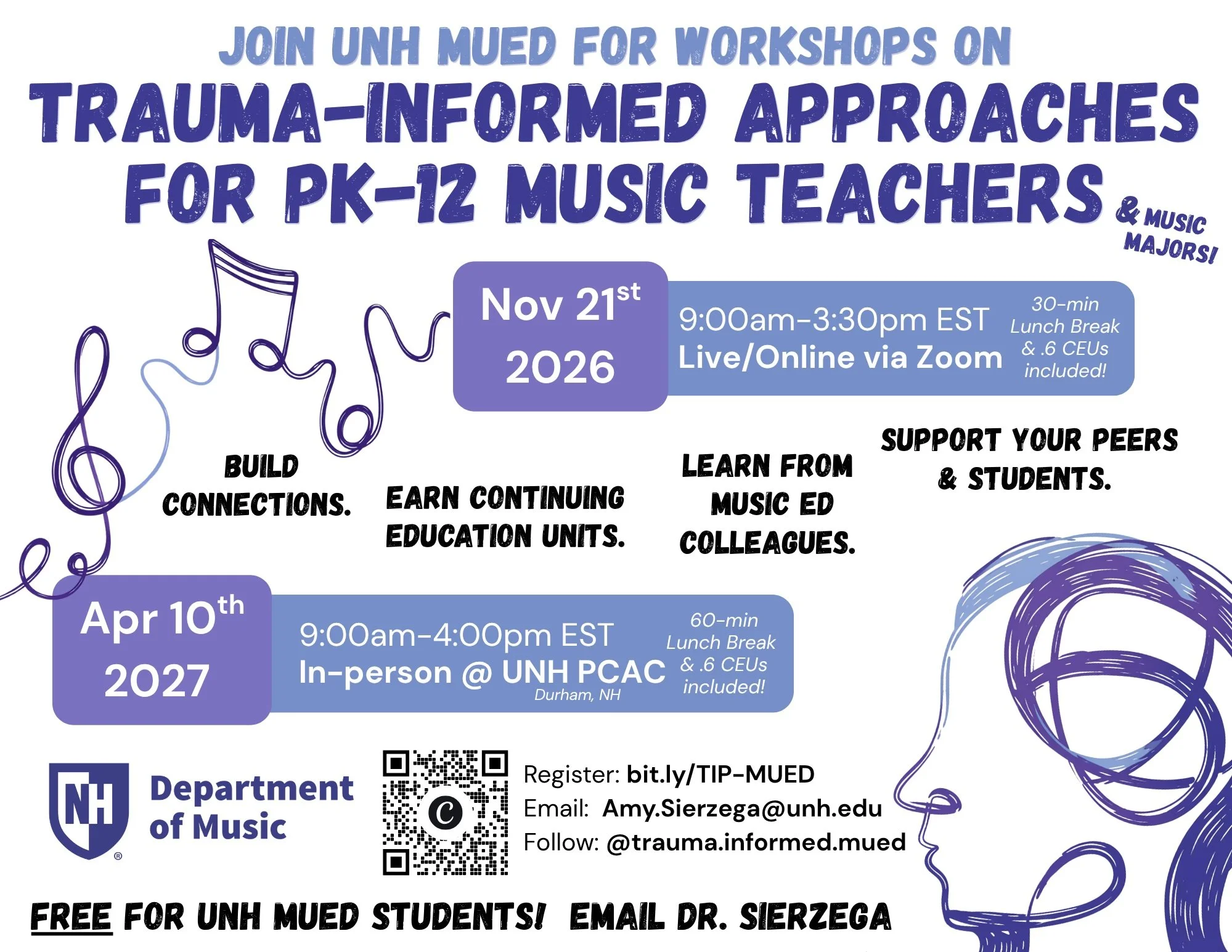
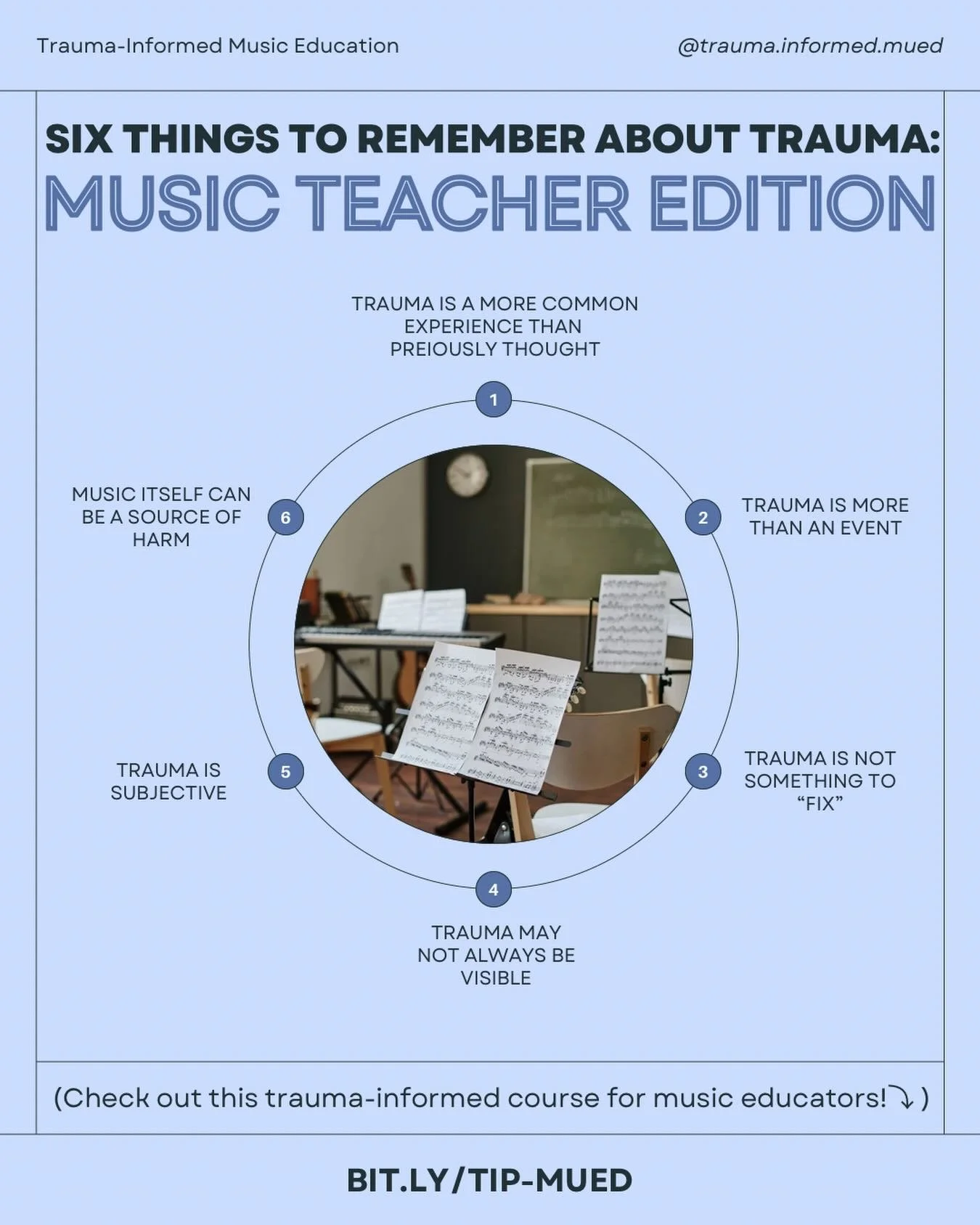
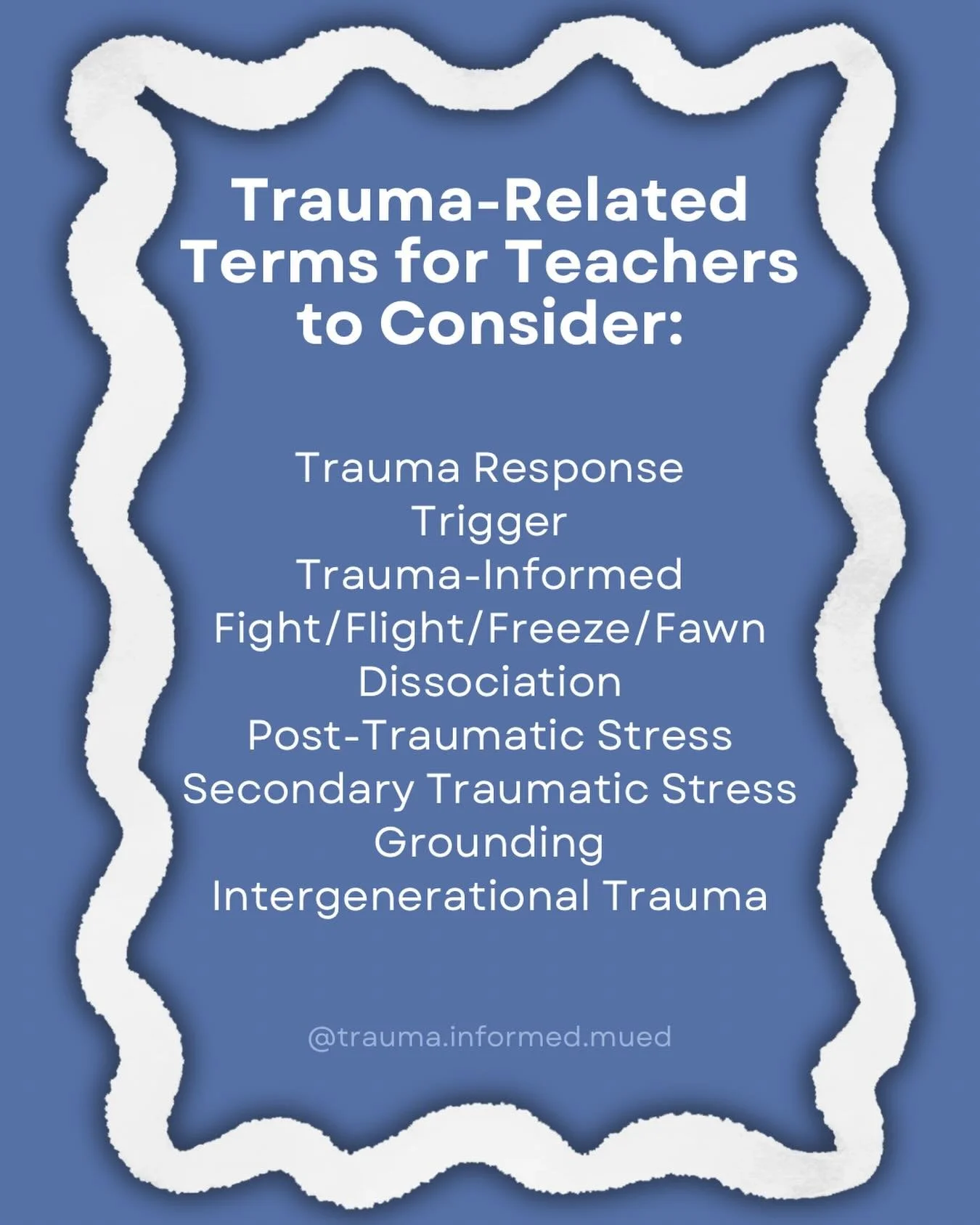
Trauma-Informed Music Teaching & Learning
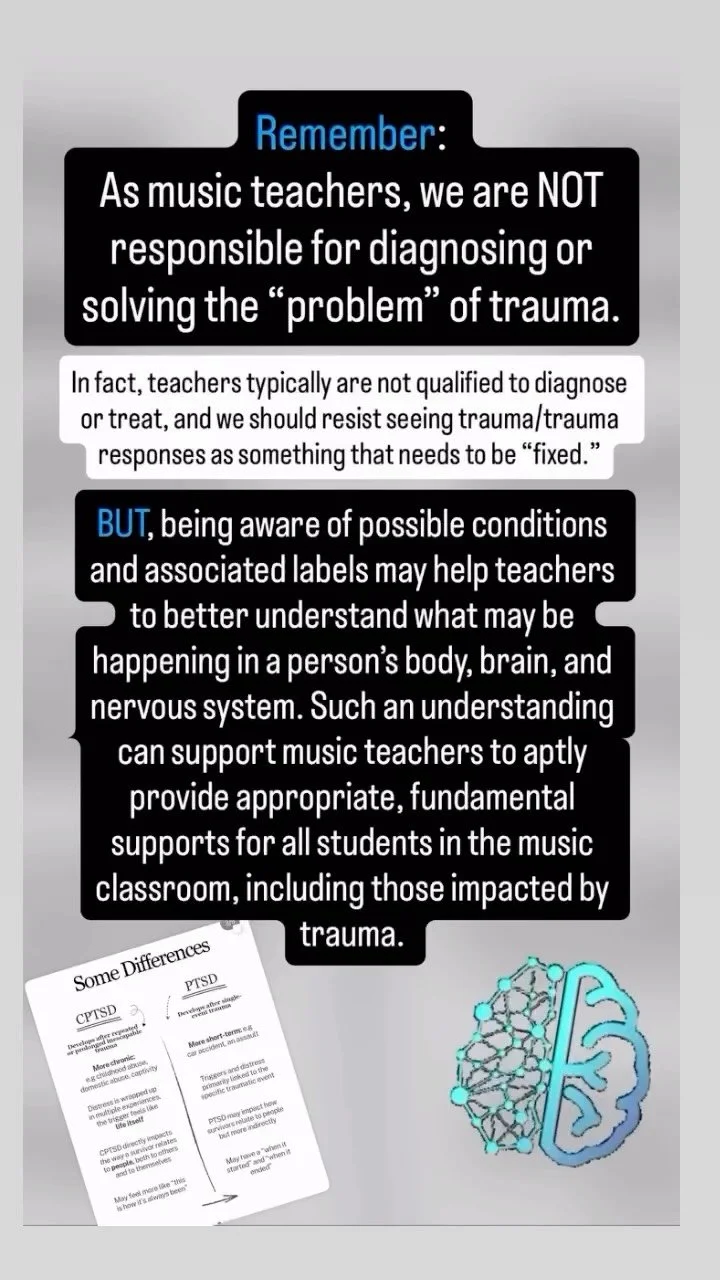
My interest in trauma-informed practices in music education spans my approaches to teaching, research, and scholarship, particularly in the area of music teacher education. For instance, my dissertation focused on the experiences of five elementary general music teachers as while they participated in an 8-week professional development on the topic of trauma-informed approaches in music education. Since then, I have continued broadening, deepening, and refining my understanding of the extant literature in order to facilitate professional learning experiences for music teachers which center inclusive, sustainable, and trauma-informed praxis. Although this work is only one facet of my scholarship, it is inherently intertwined with educational postures which aim to foster inclusion, belonging, nervous system flexibility, safety, and connection among & within school communities.